
ACL Return-to-Sport: Criterion-Based Late-Stage Rehabilitation

Photo by Risen Wang via Unsplash.
We are happy to feature this guest post contributed by Coach Blake Lancaster, owner and Head Coach at Make A Play Training in Huntsville, Alabama. You can find him on Instagram at @coachblakehsv. Please see his full bio below.
We welcome submissions from other coaches who would like to be guest contributors. All guest contributors must hold certification from NSCA, CSCCa, or NASM. Five or more years of professional experience is preferred. Please send all submissions to dj@coachdjtaylor.com and include a reference sheet, a bio, and a photo. We will let you know as quickly as possible if your submission will be published.
Athletes and sports fans are used to hearing about ACL (Anterior Cruciate Ligament) tears. They know this injury can affect an athlete’s progress, season, and career trajectory while they rest, receive care, have surgery, and heal after this common injury.
There are approximately 100,000 to 200,000 ACL ruptures per year in the United States alone, so we have a lot of recovery data and experience available to us as we think through the best way to get athletes back to their sport.
During the rehabilitation period after knee surgery, the process can be oversimplified by rehabbing the athlete according to a timetable. This is not always the fault of the practitioner as some clinics have protocols they have to follow for this type of surgery. The practitioner has no freedom to make adjustments based on the unique athlete in front of them.
A more revolutionized approach to ACL surgery rehab would be a criterion-based approach. This process involves moving to the next stage based on a set of criteria followed that considers where the athlete is actually at performance-wise, instead of where they are on a calendar.
Researchers in 2020 demonstrated the wide variance of abilities for Late Stage ACL Rehab athletes at eight months post operation (Chaput et al. (2020)). They looked at five criteria commonly used as tests to clear athletes to return to sport. ONLY 10.4% of athletes tested passed all five criteria, while 14.6% passed NONE of the tests. Because of these results, I find it safe to assume this proves athletes’ strength, power, stability, and confidence all return at an individual rate. Therefore, blanket, time-based programs for late-stage ACL rehab is at best, short-sighted and at worst, dangerous.
Based on the research available on criterion-based rehabilitation protocols, as well as anecdotal evidence from my experience in this realm, I have put together a four-phase criterion-based return-to-play protocol that all of my late-stage knee rehab athletes will go through before returning to sport.
I use objective and subjective tests to determine when an athlete is ready graduate to the next phase. Each phase has specific goals and methods within the training to help the athlete meet the criteria to move along to the next phase. Within each phase I have guidelines for exercise selection, volume, intensity, movement speed, force vectors, plyometric intensity, plyometric volume, and fieldwork drills that are appropriate for the specific phase.
Each phase may take two weeks to four months to complete, based on the progress of each individual athlete, the nature of their injury, and the specific physical motions they have issues with. If any of the phases are skipped, the relative intensity of the next phase would be too high causing even more problems with the athletes’ repaired leg. Moving too fast through the process can cause inflammation, pain, and movement compensation.
Depending on what the athlete’s current activity level is, I like to start with a few tests on their non-repaired leg so I have some baseline numbers to work with. Using a Just Jump Mat I measure single leg vertical hop height, and a single leg four-hop reactive strength index test. I measure a triple crossover hop on the non repaired leg, and I measure a 30-yard single leg run with my Dashr laser timing system. During all jumping tests, the athlete holds a PVC pipe on their back like they are doing a back squat to ensure they are not using any arm swing that might skew the results; as we are trying to measure power purely from the lower body. I used to make athletes put their hands on their hips but keeping them there during the entire test was like pulling teeth.
To clear phase one, athletes must be able to hold a single leg squat at 60 degrees for five seconds, and they must be able to display normal running kinematics at 75% speed. These guidelines are the most subjective of any phase, but they are relatively easy to pass with little repercussions if an athlete is moved along a little too early based on variability of judgment on the test. To be honest, the majority of the athletes I will get can pass these tests on day one of training with me, as most of them come in anywhere from four-to-six months post-op. Most physical therapy rehab protocols have athletes returning to running around the three-to-four month mark, so they are well practiced by the time I see them.
To proceed past phase two, the athlete must be able to pass three tests:
A single-leg vertical hop with their repaired leg within 20% of the height of their non-repaired leg.
Perfect symmetrical loading during a loaded goblet squat.
Perfect single leg landing on a depth drop from an 18 inch box.
I use the single-leg vertical hop test as a way to determine the strength of the knee, as isokinetic knee extension strength is correlated to vertical jump height. (Fischer et al., 2017) The first test is pretty straight forward and the only issue that arises comes from invalid test results due to errant jumps. The tester must ensure the athlete lands in the same place they jumped from, they do not tuck their knee in mid air, and that they can consistently hit the height being shown on the screen. The athlete must be able to demonstrate the ability to reach the height multiple times and the average of the middle three heights are taken.
The second test is more subjective and is measured during training on a daily basis as opposed to a separate set date where testing is completed. I want to ensure they have no obvious discrepancies from limb to limb under load. The usual faulty patterns are excessive shifting laterally, which causes loading towards their non-repaired leg and excessively rotating their hips to unload their repaired leg. In the first circumstance, the athlete does more lateral shifting of their entire body. In the second they stay more centered, but their hips will face a different direction than their feet.
The third test is also subjective in nature and judged on a daily basis within training. I look for a soft quiet landing with the ability to control knee valgus. This test tells us a lot about the athlete’s deficiencies and where more specific work may be needed. In my experience, the latter two tests are passed well before the single-leg hop test because they are easier to learn. The hop test can only be earned through direct improvement of strength and power.
In the third phase, the testing becomes more cut and dry and requires improvements in the previous tests, as well as the ability to pass new tests that are measuring different aspects of recovery. The athlete must be able to improve the discrepancy of height between legs in the single leg vertical hop test to within 15%, they must be able to perform the single-leg triple crossover hop test within 15% the distance of the non repaired leg, and they must be able to complete the four-jump single-leg reactive strength index test within 15% of non-repaired leg.
If all athletes were required to pass these criteria before returning to sport, re-injury rates would be cut in half (and this is only to clear three phases out of four). I am personally not a fan of the triple crossover hop for distance as recent kinematic research has proven them as more hip dominant than knee dominant, meaning we are not measuring what we thought we were measuring (Chaput et al., 2020). Athletes can compensate their way through the test, but the results will say their knee is equal to the non-repaired. Alas, this is an extremely popular test used by doctors to clear athletes to return to sport, so I make sure they are prepared for it and have been exposed to it.
The single leg RSI test is used as a measure of elasticity and stiffness. The test itself is high-intensity so it is imperative the athlete is prepared for it. In my experience, strength and power returns before elasticity. Athletes spend more time in this phase than any of the other phase within my system. As with most things, improvements early come more easily the closer to symmetrical they get, and it is harder to make other improvements at the same rate.
In the final phase, the following tests must be within 10% between limbs:
the single-leg vertical hop
the single-leg triple crossover hop for distance
the single-leg RSI test
the 30-yard single-leg run time
The only new test in this phase is the 30-yard single-leg run. Research has shown that power endurance is the last attribute to return post injury. During the 30-yard run test, the athlete has to repeatedly display power over a course of 30 yards where they may get anywhere from 20-40 contacts during a span of a few seconds. This test is usually either an obvious pass or fail. If the athlete isn’t ready to return to sport, they will start showing signs of fatigue 15 to 20 yards into the test and put their non-repaired leg down to keep from collapsing.
In a perfect scenario, any athlete who suffers an ACL injury would be required to pass these tests before returning to sport. In this perfect world re-injury rates would take a nosedive, although not all injuries or re-injuries can be avoided. Unfortunately, some athletes are cleared extremely early with large discrepancies between limbs due sheerly to the length of time since surgery. This can lead to the high re-injury rates that we see in knee injuries.
I do my best to try and manage the expectations of athletes and their parents at the beginning of the program and make them aware of the research on the topic. Some researchers found that within the group of athletes they looked at, returning to sport before nine months post-op showed a 39% re-injury rate, while returning after nine months decreased the re-injury rate down to 19%. (Grindem et al. 2016). They also found that only 5% of athletes who passed all of their return-to-sport criteria suffered a re-injury. I use this not to try and overrule any decision made by their surgeons, but to make them aware enough to be able to make their own decision armed with knowledge from both sides of the discussion.
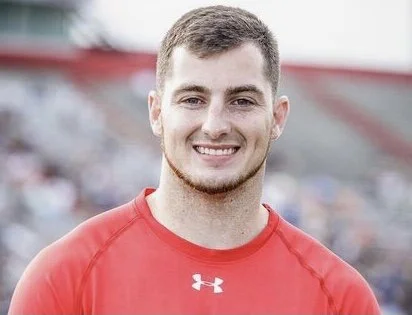
Blake Lancaster currently serves as the owner and Head Coach at Make A Play Training in Huntsville, Alabama where he trains local high school teams and late-stage knee rehab athletes. He has specialized in training late-stage knee rehab athletes for the last five years and was honored to present on the topic at the 2019 NSCA Alabama State Clinic. You can find him on Instagram at @coachblakehsv.
References
Chaput, M., Palimenio, M., Farmer, B., Katsavelis, D., Bagwell, J. J., Turman, K. A., Wichman, C., & Grindstaff, T. L. (2021). Quadriceps Strength Influences Patient Function More Than Single Leg Forward Hop During Late-Stage ACL Rehabilitation. International journal of sports physical therapy, 16(1), 145–155.
Fischer, F., Blank, C., Dünnwald, T., Gföller, P., Herbst, E., Hoser, C., & Fink, C. (2017). Isokinetic Extension Strength Is Associated With Single-Leg Vertical Jump Height. Orthopaedic Journal of Sports Medicine. https://doi.org/10.1177/2325967117736766
Grindem H, Snyder-Mackler L, Moksnes H, Engebretsen L, Risberg MA. Simple decision rules can reduce reinjury risk by 84% after ACL reconstruction: the Delaware-Oslo ACL cohort study. Br J Sports Med. 2016 Jul;50(13):804-8. doi: 10.1136/bjsports-2016-096031. Epub 2016 May 9. PMID: 27162233; PMCID: PMC4912389.
Myer, G. D., Paterno, M. V., Ford, K. R., Quatman, C. E., & Hewett, T. (2006). Rehabilitation after anterior cruciate ligament reconstruction: Criteria-based progression through the return-to-sport phase. Journal of Orthopaedic and Sports Physical Therapy, 36(6), 385-402. https://doi.org/10.2519/jospt.2006.2222